

A map for the inner terrain.
The Enneagram offers language for our patterns, compassion for our defenses, and a path toward greater courage, choice, and freedom.
The Enneagram
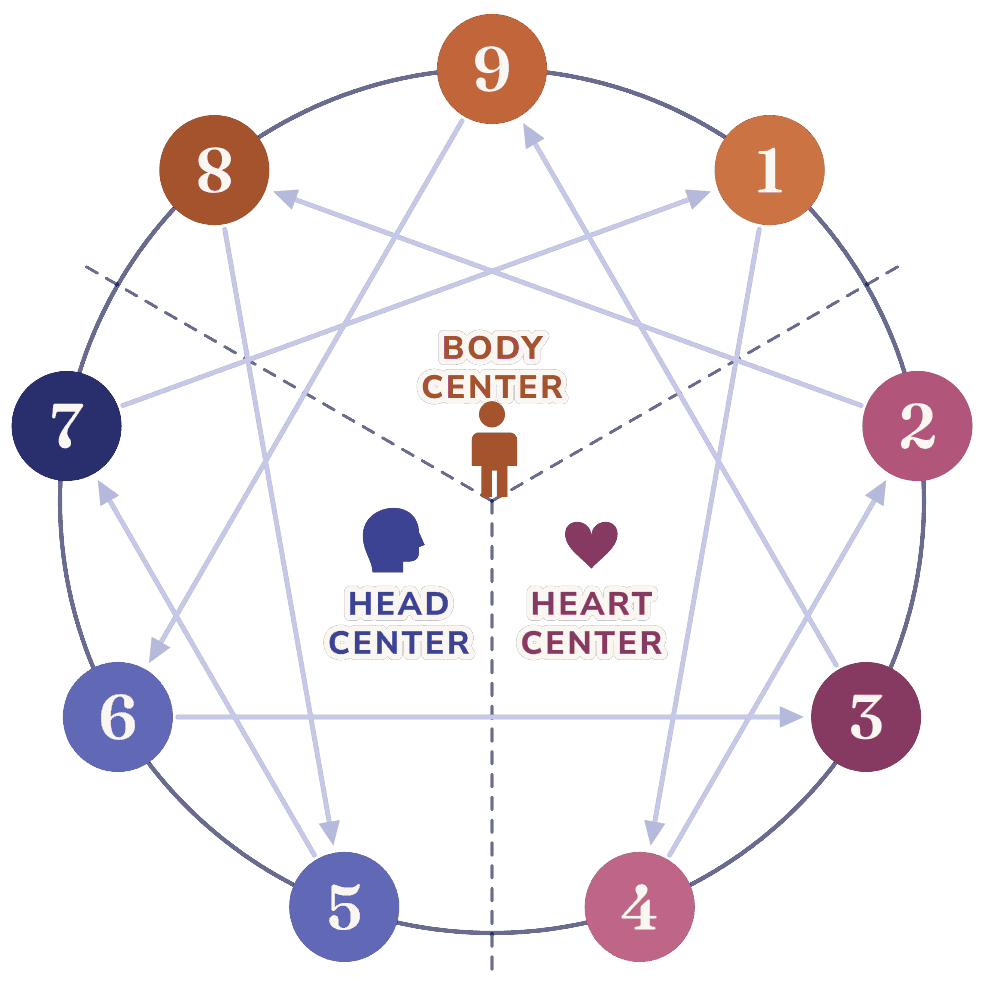
The Enneagram is a psychological and spiritual map of nine personality types. It’s meant to awaken something deeper in us and point us toward our better selves, with more understanding and compassion for ourselves and others.
Each type describes patterns that have helped us get along in the world. But because they’re so familiar and automatic, those same patterns can quietly limit us. When we know our type, we see more clearly why we do what we do, and we can make conscious choices instead of being driven by habit.
I think of the Enneagram as the great equalizer. Every type has both light and shadow. Knowing that helps lower the barriers to vulnerability, which is essential for building trust.
A Journey, Not a Label
The Enneagram isn’t meant to define you. It’s meant to free you. It’s a lifelong journey with awakenings along the way, from our habitual patterns toward our higher qualities.
I’ve been exploring it for myself and with others for about a decade, and I’m still a student. I’ve always believed the two most important qualities of a leader are self-awareness and emotional intelligence, and the Enneagram is the best tool I know for developing them.
How we’ll use it in coaching
What?
Discovering your type and subtype.
So what?
Exploring what it means for you.
Now what?
Deciding where to begin, based on where you are right now.
Three Centers, Nine Types, 27 Subtypes
The nine types are grouped into three centers of intelligence: the Body (8, 9, 1), the Heart (2, 3, 4), and the Head (5, 6, 7).
Each type also has three subtypes, three distinct versions of the type, shaped by whichever of our three instinctual drives is strongest: Self-Preservation, Social, or One-to-One. Your dominant drive combines with your type in an alchemical way, creating one of three more specific and nuanced expressions of your type, each with its own growth path.
This subtype approach comes from the work of Claudio Naranjo, deepened and expanded over more than two decades by Beatrice Chestnut. My own journey began when her description of the Social Eight helped me recognize myself, and it led me to study with her in person, and eventually to professional certification with Beatrice and Uranio Paes through the CP Enneagram Academy.
The Nine Types at a Glance
These brief sketches are just a starting point. The real insight, and the path to transformation, comes alive through the subtypes and instincts we’ll explore together.
-
Type 8
Strong • Direct • Protective
Eights make big things happen and stand up for what’s fair. Their growth often begins when they let others see their vulnerability, too.
-
Type 9
Steady • Accepting • Inclusive
Nines see every side and help groups find common ground. Their growth often begins when they notice what they want and bring their own voice into the room.
-
Type 1
Principled • Conscientious • Fair-minded
Ones notice what could be better and work hard to do things the right way. Their growth often begins when they ease up on their inner critic.
-
Type 2
Warm • Generous • Attuned
Twos tune in to what others need and are quick to help. Their growth often begins when they honor their own needs and let others give to them.
-
Type 3
Capable • Driven • Adaptable
Threes set goals, get things done and adapt to what success looks like around them. Their growth often begins when they lead from who they are, not only what they achieve.
-
Type 4
Deep • Expressive • Creative
Fours seek meaning and authenticity and feel what others may miss. Their growth often begins when they appreciate what’s already here instead of what feels missing.
-
Type 5
Thoughtful • Insightful • Calm
Fives seek understanding and bring clear thinking to complex questions. Their growth often begins when they step out of observing and into connection.
-
Type 6
Loyal • Perceptive • Prepared
Sixes anticipate what could go wrong and help the group get ready. Their growth often begins when they trust their own inner authority and find courage alongside their doubt.
-
Type 7
Optimistic • Curious • Playful
Sevens see possibilities everywhere and bring energy and ideas. Their growth often begins when they stay with what’s hard instead of moving to the next good thing.
Questions about the Enneagram
-
An assessment can be a helpful starting point, but it’s only a starting point, since tests often mistype people. Your type is best discovered through self-observation and reflection over time, ideally with the support of an accredited Enneagram teacher and a good book or two. It’s something we can explore together, and I’m happy to share my favorite assessment and book recommendations.
-
Your core type stays the same throughout life. What changes is how you live it. As we grow, our patterns have less hold on us, and we have more choice.
-
When teammates understand how each person sees the world, it’s easier to build trust, have hard conversations and work through conflict with compassion. It gives everyone a shared language for growing together.
-
Not at all. If you’re curious, we can explore it together, starting right where you are.
Let’s begin where you are.
Curious about your type, or ready to go deeper with it?
The first step is a simple conversation.